Hi Aelf Crew,
After the marathon journey from Flores, I finally arrived at Lake Atitlán. I checked into Mr. Mullet’s Party Hostel in San Pedro La Laguna.
Mr. Mullet’s and the Famous Pub Crawl
It took me a while to decompress after that multi-bus, multi-ferry ordeal, but the night I arrived, the hostel was running its legendary pub crawl.
For GTQ 200 (roughly £20), the ticket included a t-shirt, entry to five bars across town, and twelve shots of a mysterious bright orange concoction.
As with all hostel pub crawls it started strong and gradually fizzled out as the night wore on. By the final stop, the hostel was selling tickets to a rave in the jungle, which I wisely went to. The only thing to help me recover from travel ordeals is a party and a 6am tuk-tuk.
Tuk-Tuks
Tuk-tuks are the main way to get around towns like Panajachel, San Pedro, and San Juan, while lanchas (water taxis) connect the lakeside villages.
Swimming in Lake Atitlán
The next day, all I wanted was to get into the water. I’m happiest when I’m swimming, and Lake Atitlán is breathtaking. However, before getting in I was given a reality check about the environmental situation of the water.
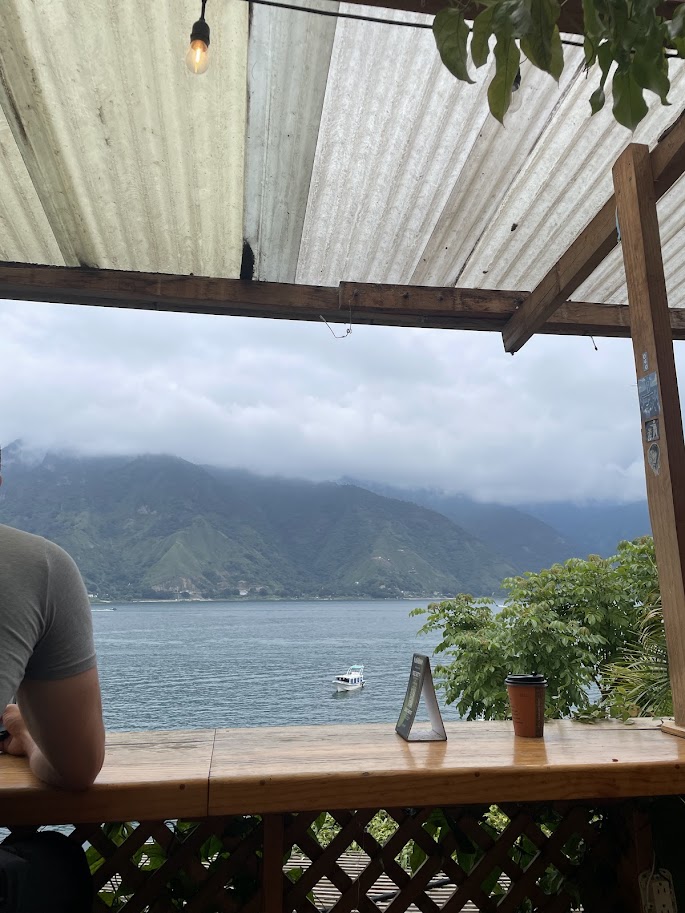
Lake Atitlán is a still body of water with no natural outlet, which means pollution lingers. Only around 20% of local sewage is treated; the rest flows directly into the lake. In addition there is agricultural runoff, detergents from laundry, and rubbish washed in during storms.
Here’s what that means in practice:
- Avoid swimming near the major towns where pollution is highest – Panajachel, San Pedro, and Santiago Atitlán.
- The water quality is generally better near San Marcos and more isolated hotels around the lake.
- The Cerro Tzankujil Reserve is considered the cleanest and safest place to swim. This reserve is near San Marcos La Laguna and is a popular spot for cliff jumping – with a 12-metre/40-foot wooden platform!
I was feeling fairly run-down at this stage of my travels (and absolutely nothing to do with the rave the night before), so I skipped swimming to avoid any risk of illness – though it took serious willpower not to dive in.
Precautions for Swimming Safely
If you plan to take a dip, a few smart steps can make a big difference:
- Ask locals or hostel staff about current conditions (though note that locals often assume it’s fine).
- Avoid swimming after heavy rain, when runoff increases pollution.
- Don’t swim if the water looks foamy, discoloured, or smells odd.
- Skip it if you have open wounds or a weakened immune system.
- Keep your head above water and avoid swallowing any.
- Shower straight after swimming to reduce risk of irritation or infection.
Tips to Learn from Aelfgifu:
- Short tuk-tuk rides cost Q5–Q15 ($0.65–$2) depending on distance and time of day.
- Always negotiate the fare before getting in, especially at night or in touristy spots.
- Around Lake Atitlán, cash is king, so make sure to always have some on you as ATMs can be unreliable and not always operating.
Has anyone been swimming in the lake and seen any issues with the water quality like I described? Let me know in the comments!
If you’d like more honest travel notes like this, you can subscribe using the yellow button at the top or bottom of the page – no spam, just new posts when they’re published.
Clear skies with not-so-clear waters,
Aelfgifu
 Aelfgifu Travels
Leave a comment